Tucson Pool Resurfacing & Plastering

Pool Tile in Tucson, AZ
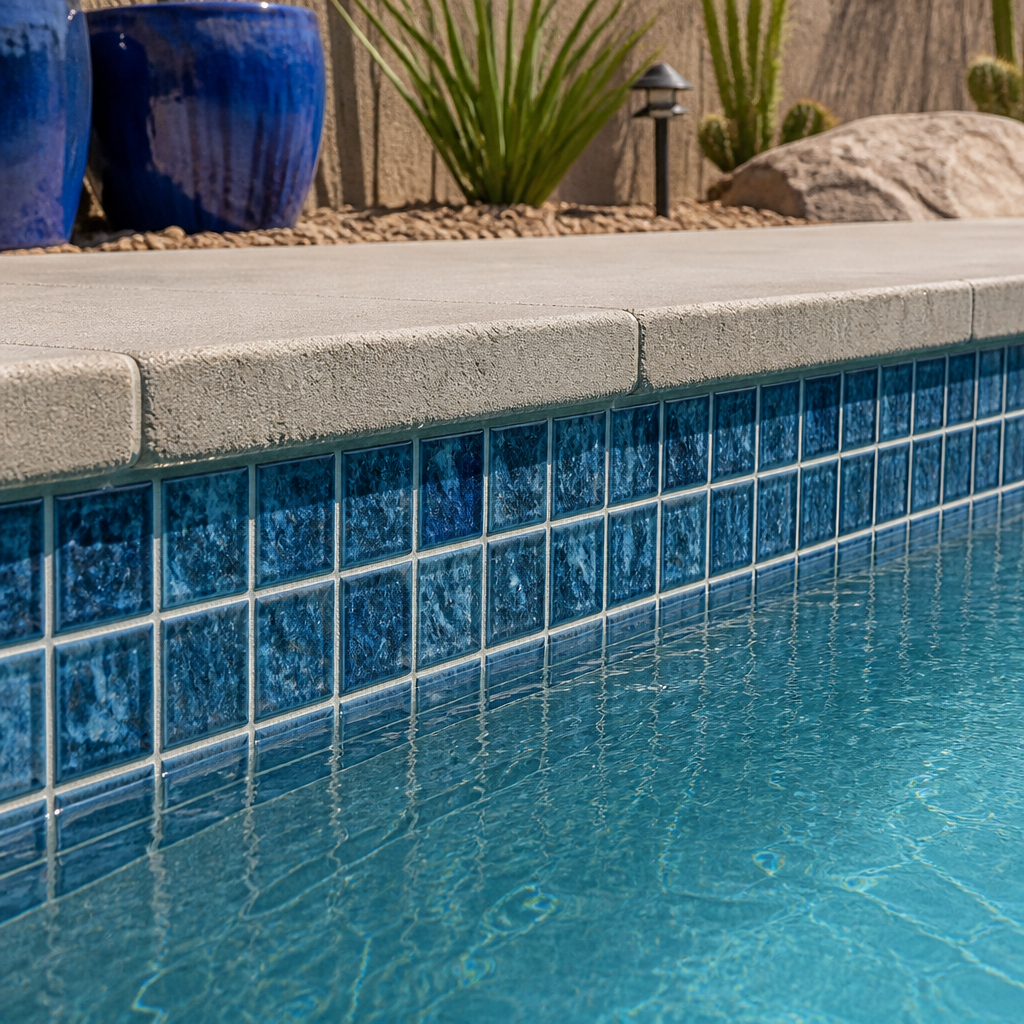
Of all the design elements that define how a swimming pool looks and feels, pool tile may be the single most visible detail that separates an ordinary pool from one that genuinely turns heads. Pool tile in Tucson, AZ does far more than add visual interest to a waterline. It protects the pool shell from the mineral scaling and staining that Tucson’s notoriously hard water deposits at the waterline zone, provides a cleanable surface that resists the calcium buildup that plagues unprotected plaster surfaces, and gives the entire pool a finished, polished character that elevates the whole backyard. At Tucson Pool Resurfacing & Plastering, we provide professional pool tile installation, replacement, and repair services for homeowners throughout the greater Tucson area, from Oro Valley and Marana to Catalina Foothills, Casas Adobes, Rita Ranch, and all surrounding communities. Whether you are building a new pool and selecting tile for the first time, replacing outdated or damaged waterline tile as part of a renovation, or addressing loose, cracked, or heavily scaled tile that needs professional attention, our team brings the skill, the material knowledge, and the local climate expertise to deliver tile work that looks outstanding and holds up in Southern Arizona’s demanding environment.
Posted on Google Google
Tysell profile picture
Tysell
Google star 1Google star 2Google star 3Google star 4Google star 5Trustindex verifies that the original source of the review is Google.
A HUGE THANK YOU TO TUCSON POOL RESURFACING & PLASTERING!!!! The team delivered on our pool that was 36 years old. In as little as 3 months with labor and material shortages, start to finish, I cannot thank the crew enough for the spectacular work that was done. We have a 50K gallon pool and a 2K gallon spa. This was no easy task. Highly recommend!
Posted on Google Google
Lira Mathewson profile picture
Lira Mathewson
Google star 1Google star 2Google star 3Google star 4Google star 5Trustindex verifies that the original source of the review is Google.
5 stars is not enough!! We wanted a full upgrade on our gunite pool and now it looks like a brand new luxury pool. The tile replacement around the waterline is gorgeous and the spa resurfacing came out perfect. The crew was so professional and friendly the whole time. HIGHLY recommend to everyone!!
Posted on Google Google
Jerry Shaffer profile picture
Jerry Shaffer
Google star 1Google star 2Google star 3Google star 4Google star 5Trustindex verifies that the original source of the review is Google.
From the quote to the final result the whole experience was smooth and professional. The pool and spa resurfacing came out absolutely beautiful. 10 out of 10!

Transform Your Tucson Pool Today

POOL RESTORATION EXPERTISE

WE SPECIALIZE IN COMPLETE POOL SOLUTIONS

Expert pool resurfacing, plastering, remodeling, equipment services, and complete pool restoration—backed by quality craftsmanship and years of experience serving Tucson and Southern Arizona.

SEND US A MESSAGE

YES! WE REPLY TO THESE MESSAGES ASAP!

Why Pool Tile Matters More in Tucson Than Most Places

Pool tile is a functional necessity in any pool, but in Tucson, it plays an especially critical protective role that makes the quality of your tile installation matter more than it might in other markets.
  • The Hard Water Challenge Tucson’s municipal water supply is among the hardest in the United States, carrying high concentrations of calcium and magnesium that deposit on pool surfaces continuously. At the waterline, where water evaporates most actively and the pool surface transitions between wet and dry exposure, calcium scale accumulates faster and more aggressively than anywhere else in the pool. Smooth plaster surfaces at the waterline absorb and bond with this calcium, making it increasingly difficult to remove over time and creating the rough, discolored waterline staining that is one of the most common cosmetic complaints among Tucson pool owners.
  • Quality tile at the waterline provides a surface that is fundamentally different in its relationship with calcium scale. Dense, non-porous tile resists calcium bonding far more effectively than plaster, keeping scale on the surface where it can be cleaned rather than allowing it to penetrate and stain. Regular tile cleaning at the waterline removes calcium deposits before they harden into stubborn scale, maintaining the pool’s appearance with routine maintenance rather than periodic acid washing or aggressive chemical treatment.
  • UV Radiation and Surface Degradation Tucson’s UV intensity is among the highest in the continental United States. Pool surfaces at and above the waterline receive direct, intense sun exposure that accelerates material degradation. Quality pool tile, particularly glass and porcelain options, is highly resistant to UV-related color fading and surface degradation, maintaining its appearance far longer than plaster in the most UV-exposed zone of the pool. Selecting tile materials and colors that are UV-stable is an important consideration for Tucson pool tile installations.
  • Thermal Cycling and Adhesion Demands Tucson’s significant temperature swings between day and night and across seasons create thermal cycling stress in pool tile installations. Tile, adhesive, and grout all expand and contract at different rates with temperature changes, and the cumulative effect of this cycling over many years stresses the adhesion between tile and substrate. Quality installation using correct adhesive systems, proper grout selection, and appropriate expansion joint placement accommodates this thermal movement and maintains tile adhesion over the long term. Cut-rate installation that ignores these factors produces tile that begins to loosen and pop off within a few years in Tucson’s thermally active environment.
  • Evaporation and Waterline Concentration Tucson’s low humidity drives pool water evaporation at exceptional rates. Water evaporates most actively at the waterline surface, and as it does, the dissolved minerals it carries are left behind on the tile surface. The concentration of this mineral deposition at the waterline in a high-evaporation environment like Tucson means that tile cleaning and maintenance is a more regular necessity here than in humid climates where evaporation is slower and mineral deposition less aggressive.
Understanding these local conditions informs every tile selection and installation decision we make for Tucson pools.

Pool Tile Services We Offer in Tucson

Our pool tile work covers the full range of tile services that residential pool owners in Tucson need, from new installation and renovation replacement to targeted repair and professional tile cleaning.

Waterline Tile Installation

Waterline tile installation is our most frequently requested tile service and the foundation of our pool tile work. The waterline band runs around the perimeter of the pool at the water’s surface level, typically 6 inches in height, and serves as both a decorative accent and a protective barrier against the most aggressive scaling and staining zone in the pool. Installing waterline tile correctly in a Tucson pool requires attention to several factors that directly affect how long the installation holds up and how well it performs.
  • Substrate preparation is the foundation of a lasting tile installation. Before any tile goes on, the substrate must be sound, clean, and properly prepared to accept the tile adhesive. On existing pools being retiled as part of a renovation, old tile and adhesive are completely removed to expose the gunite or shotcrete shell beneath. The shell surface is prepared to the profile and cleanliness required by the adhesive system being used. Any substrate defects that would compromise adhesion are addressed before tiling begins.
  • Adhesive selection for pool tile in Tucson needs to account for continuous water submersion, thermal cycling, and the specific substrate conditions present. We use professional-grade tile setting materials rated for pool and wet area applications, selected for compatibility with the specific tile type and substrate conditions at each installation. Using incorrect or inadequate adhesive systems is one of the most common causes of premature tile failure in pool environments.
  • Tile layout and pattern is established before any tiles are set to ensure consistent spacing, correct alignment, and proper centering of the tile pattern around the pool’s perimeter. Pool tile that is installed without careful layout planning can result in awkward cuts, uneven grout joints, and pattern discontinuities that are immediately obvious and cannot be corrected without removing and resetting the tile.
  • Grouting and joint filling completes the tile installation with properly mixed, correctly colored grout that fills the joints between tiles uniformly, seals the installation against water infiltration, and contributes to the finished appearance of the tile band. Grout selection for pool tile must account for continuous wet exposure, thermal movement, and resistance to the staining that pool chemicals and mineral deposits cause over time.

Pool Tile Replacement and Renovation

Tile replacement as part of a pool renovation is one of the highest-impact changes you can make to an existing pool’s appearance. Old, discolored, calcium-encrusted, or simply outdated tile that has been in place for 15 or 20 years can make an otherwise serviceable pool look genuinely tired and neglected. New tile transforms the pool’s visual character immediately and completely. We remove existing tile and adhesive completely before installing new tile, ensuring the new installation has a clean, properly prepared substrate rather than being bonded over old adhesive residue that compromises adhesion. This complete removal approach takes more time than tiling over existing tile, but it produces a significantly better result in terms of both appearance and longevity. Tile renovation is most commonly undertaken when a pool is already drained for interior resurfacing, because the pool is out of service and the waterline area is accessible for the preparation and installation work required. Combining tile replacement with interior resurfacing allows both elements to be selected together and produces a cohesive finished appearance rather than a mix of new and old materials at different stages of wear.

Decorative Accent Tile and Feature Tile

Beyond the standard waterline band, pool tile is used in a variety of decorative applications that give pools a distinctive, custom character. Decorative tile applications we handle include:
  • Step and bench tile that covers pool steps, benches, and ledges with tile rather than leaving them as bare plaster. Tiled steps have a premium appearance, are easier to clean than plaster, and provide better visual definition of the step edges that improves safety. In Tucson’s hard water environment, tiled steps also resist the calcium staining that makes plaster steps look progressively worse over time.
  • Pool floor and wall mosaic accents including tile medallions, logo inlays, geometric patterns, and decorative bands set into the pool floor or walls. These elements give custom pools a distinctive identity and can be tailored to reflect the homeowner’s aesthetic preferences, from simple geometric patterns to elaborate custom designs.
  • Full tile pool interiors where the entire pool interior is covered in tile rather than plaster or aggregate finish. Full tile pools have a dramatically luxurious appearance and offer outstanding durability and cleanability in Tucson’s hard water environment. They are a premium option associated with high-end custom pool designs.
  • Water feature tile covering spillways, waterfall faces, grotto walls, and other water feature surfaces with tile that is selected for both its appearance and its ability to withstand the continuous water flow and splash exposure of a working water feature.
  • Sun shelf and tanning ledge tile that covers the floor of shallow wading areas with tile that is comfortable underfoot, easy to clean, and visually integrated with the rest of the pool’s tile design.

Pool Tile Repair

Not every tile situation requires a full replacement. When tile damage is localized to a specific area, individual tile replacement and repair is a practical and cost-effective solution that restores the pool’s appearance without the disruption and cost of a full retiling project.
Tile repairs we handle include:
  • Individual tile replacement for tiles that have cracked, chipped, or fallen off the pool wall. Matching replacement tiles to the existing installation requires sourcing tiles that are compatible in size, color, and finish with the existing tile. We work to find the closest available match and are transparent about the degree of match achievable before proceeding with a repair.
  • Regrouting sections or the entire waterline where grout has failed, cracked, or become so stained that cleaning no longer restores an acceptable appearance. Failed grout allows water infiltration behind the tile that eventually compromises adhesion and causes tile to loosen. Regrouting before tiles begin to loosen prevents this progression.
  • Resetting loose tiles that have popped off the wall due to adhesion failure but remain intact. If the tile itself is undamaged and a compatible adhesive repair is possible, resetting and regrouting loose tiles is a practical repair approach.
  • Calcium scale removal and tile restoration for tiles that are heavily encrusted with calcium deposits but are otherwise sound and intact. Professional calcium removal using appropriate descaling methods and tools restores tile appearance significantly without replacement and extends the useful life of an existing tile installation.

Pool Tile Cleaning and Descaling

Calcium scale management is an ongoing maintenance reality for Tucson pool tile. Even with consistent water chemistry management, Tucson’s hard water environment causes calcium to deposit on tile surfaces over time, and periodic professional cleaning removes this buildup before it becomes hardened, thick scale that is significantly more difficult to address. Professional tile cleaning for Tucson pools involves applying appropriate descaling solutions to soften calcium deposits and using mechanical cleaning tools to remove the loosened scale without damaging the tile surface or grout. For a heavier scale that has been building for multiple seasons, more intensive descaling procedures, including careful use of acid cleaning compounds, may be required to restore the tile surface. Pumice stone cleaning is a widely used method for removing moderate calcium scale from pool tile without chemical descaling. When done correctly with appropriate pumice tools at the right stage of scale development, it is an effective maintenance approach for Tucson pool tile. We assess the scale condition of your tile and use the approach most appropriate to what is actually present, rather than applying the same treatment regardless of scale severity.

Pool Tile Materials and Options for Tucson Pools

Tile selection for a Tucson pool involves balancing aesthetics, durability, heat management, slip resistance for submerged surfaces, and compatibility with our specific water chemistry and UV environment. Here is a detailed look at the tile material options we work with and how they perform in Tucson’s conditions:

Glass Mosaic Tile

Glass mosaic tile is one of the most visually striking options available for pool waterline and feature applications. The translucent quality of glass tile creates a luminous, jewel-like appearance at the waterline that catches Tucson’s abundant sunlight and creates a visual effect that no other tile material replicates. Glass tile is available in an extraordinary range of colors, finishes, and sizes, from small penny round mosaics to larger format glass tiles in a range of shapes and patterns. The color depth and visual interest of glass tile are unmatched by ceramic or porcelain options, making it the preferred choice for high-end custom pools where visual impact and premium aesthetics are priorities.
From a performance standpoint, glass tile is non-porous and highly resistant to staining, calcium bonding, and chemical exposure. It does not fade under UV exposure the way some materials do, maintaining its color vibrancy over many years in Tucson’s intense sun. Glass tile is also highly resistant to algae and bacterial growth because its smooth, non-porous surface provides no texture for organic material to anchor in. The primary consideration with glass tile is that it requires skilled installation. Glass tile is more brittle than ceramic or porcelain during cutting and handling, requires specific adhesive systems designed for glass tile applications, and is less forgiving of substrate movement than more flexible tile materials. In Tucson’s thermally active environment, using the correct adhesive and grout systems for glass tile is particularly important for long-term adhesion performance.

Ceramic Pool Tile

Ceramic tile is the most traditional and widely used material for pool waterline applications. It is durable, available in a wide range of colors and patterns, straightforward to install and cut, and represents a reliable, accessible option for waterline tile that performs well in pool environments. Ceramic tile for pool applications is manufactured to specific standards for water absorption and durability that make it appropriate for continuous wet exposure. Not all ceramic tile is suitable for pool use, and selecting pool-rated ceramic tile from reputable manufacturers is important for long-term performance.
In Tucson’s hard water environment, glazed ceramic tile with a smooth, dense glaze layer resists calcium bonding reasonably well and can be maintained with regular cleaning. Unglazed ceramic is not a good choice for Tucson pool waterline applications because its porous surface absorbs and bonds calcium more readily. Ceramic tile is available in both traditional patterns associated with classic pool aesthetics and contemporary designs that suit modern pool environments. The range of available sizes, colors, and patterns makes ceramic a versatile choice that can achieve a wide variety of design goals at an accessible price point.

Porcelain Pool Tile

Porcelain tile is a premium ceramic product that is fired at higher temperatures and to tighter tolerances than standard ceramic, producing a denser, harder, and less porous tile that outperforms standard ceramic in wet and chemically exposed environments. For Tucson pools, porcelain’s lower porosity translates to better resistance to calcium scale bonding, better resistance to staining from pool chemicals and organic matter, and better freeze resistance for pools that experience temperature extremes at the tile line during cool desert nights. Porcelain tile also has better dimensional consistency than standard ceramic, which makes it easier to achieve tight, uniform grout joints and a clean, precise finished appearance.
Large-format porcelain tiles have become increasingly popular for pool waterline applications in contemporary pool designs because they create a clean, minimal appearance with fewer grout joints visible at the waterline. The precision dimensional tolerances of quality porcelain make large-format installations more achievable than they would be with less consistent standard ceramic.

Natural Stone Tile

Natural stone tile options, including travertine, slate, limestone, and marble, create a distinctive, premium appearance that suits pool designs aiming for a natural or resort-inspired aesthetic. Natural stone has a unique character, warmth, and visual depth that manufactured ceramic and glass tiles do not replicate, and it integrates particularly well with desert landscaping and the natural palette of the Tucson environment.
The performance considerations for natural stone in Tucson pool applications are more complex than for ceramic or glass. Natural stone is more porous than dense ceramic or porcelain, which means calcium scale and pool chemical staining penetrate more deeply and are more difficult to remove without appropriate sealing and maintenance. Selecting appropriate stone types, using quality penetrating sealers, and maintaining proper water chemistry are all important for keeping natural stone pool tile looking its best in Tucson’s hard water environment. Travertine is one of the most popular natural stone options for Tucson pool tile because its natural calcium carbonate composition is somewhat more compatible with our hard water chemistry than other stone types, and its warm, earth-toned palette complements both the desert landscape and a wide range of pool interior finishes.

Pebble and Mosaic Feature Tiles

Beyond standard tile formats, pebble mosaic tiles, small-format mosaic sheets, and specialty decorative tiles open up a wide range of design possibilities for pool feature areas, floor medallions, step accents, and water feature surfaces. These materials are selected for specific decorative applications rather than standard waterline coverage and are installed using the same professional techniques and material standards we apply to all pool tile work.

Ready to Start Your Tucson Pool Project?

Choosing the Right Pool Tile for Your Tucson Pool

With the range of tile options available, selecting the right tile for your Tucson pool involves working through a few key considerations:
  • Aesthetic goals are the starting point. The tile you choose should complement the pool’s interior surface, the coping material, and the overall backyard design aesthetic. A pebble interior with natural stone coping and travertine deck calls for a different tile character than a white plaster interior with precast coping and a contemporary deck finish. We help you think through how different tile options will relate to the other elements of your pool design.
  • Durability and maintenance expectations should reflect how much ongoing maintenance attention you are willing to invest. Glass and dense porcelain tiles require less aggressive calcium management than more porous materials and are better choices for pool owners who prefer lower-maintenance tile care.
  • Budget affects which material options are realistic for your project. We present options across a range of price points and help you understand the tradeoffs between initial tile cost and long-term performance and maintenance demands.
  • Installation quality matters as much as tile selection. The best tile installed with inadequate adhesive, incorrect grout, or poor substrate preparation will fail prematurely in Tucson’s thermally active environment. We invest in proper installation technique regardless of the tile material selected, because the tile and the installation are equally important to the long-term result.

Pool Tile and Pool Renovation: Planning Them Together

Pool tile renovation delivers its best results when it is planned and executed as part of a broader pool renovation rather than as an isolated project. When a pool is already drained for interior resurfacing, the conditions are ideal for tile replacement because the waterline area is fully accessible, the substrate is exposed for proper preparation, and both the new tile and new interior surface can be selected together to achieve a cohesive finished appearance.
Selecting your interior finish and your waterline tile at the same time allows you to consider how the two elements relate visually, ensuring that colors, textures, and material character work together rather than clashing. A pebble interior in warm earth tones paired with a complementary glass mosaic waterline tile creates a completely different aesthetic impression than either element would on its own, and achieving that cohesion requires planning both elements together from the start.
We coordinate tile and interior resurfacing work as part of integrated renovation projects throughout Tucson, ensuring that each element is installed in the correct sequence and that the finished pool reflects a unified design rather than independent decisions made at different times.

Pool Tile Across Tucson Neighborhoods

We provide pool tile installation, replacement, repair, and cleaning services throughout the greater Tucson metro, including:
  • Catalina Foothills, where custom hillside pools and resort-style designs call for premium glass mosaic and natural stone tile selections that complement sophisticated outdoor living environments
  • Oro Valley, where a large stock of established pools has waterline tile that is 15 to 20 years old and ready for a renovation that freshens the entire pool’s appearance
  • Marana, a rapidly growing northwest Tucson community, where new pool construction tile installations, and existing pool tile renovations are both regular service needs
  • Casas Adobes, a mature northwest Tucson neighborhood, where many pools have original tile showing the effects of years of hard water exposure and thermal cycling
  • Rita Ranch, where active southeast Tucson family pools benefit from durable, easy-to-clean tile selections that hold up to heavy use and Tucson’s hard water conditions
  • Sahuarita and Green Valley, where seasonal and year-round residents invest in tile renovation work that refreshes their pools before the swim season
  • Vail and Corona de Tucson, growing east-side communities with increasing demand for both new construction tile installations and renovation tile replacement
  • Central and Midtown Tucson, including established neighborhoods where older pools with original tile are candidates for renovation that transforms the pool’s appearance
  • South Tucson and surrounding communities, where residential pools of all ages benefit from professional tile services tailored to Tucson’s specific conditions

Our Pool Tile Installation Process

Whether we are installing new tile on a freshly built pool, replacing existing tile as part of a renovation, or making targeted repairs to a tile installation in otherwise good condition, our process follows a consistent approach that prioritizes proper preparation, correct material selection, and skilled execution.

Step 1: Assessment and Consultation We begin with a thorough assessment of the existing tile condition, the substrate beneath it, and the scope of work the situation calls for. For new installations, we discuss your design goals and material preferences and walk through the options appropriate for your pool and budget. For repair and replacement work, we assess what existing elements can be retained and what needs to be fully addressed.

Step 2: Material Selection and Proposal We present tile options appropriate to your design goals, budget, and the performance requirements of your specific pool and location. Once selections are made, you receive a written proposal specifying the exact scope of work, materials to be used, and the project timeline.

Step 3: Pool Draining and Substrate Preparation For waterline tile work, the pool is drained to the appropriate level to expose the work area. Existing tile and adhesive are removed completely where full replacement is being performed. The substrate is prepared to the cleanliness and profile required by the adhesive system being used, with any substrate defects repaired before tiling begins.

Step 4: Layout and Setting Tile layout is established before any tiles are set, ensuring consistent spacing, correct alignment, and proper centering of the pattern around the pool perimeter. Tiles are set using professional-grade adhesive appropriate to the tile material and substrate conditions, with consistent joint spacing maintained throughout the installation.

Step 5: Grouting and Finishing After the set adhesive has cured to the required strength, grout is mixed and applied to fill all tile joints uniformly. Grout color and type are selected for compatibility with the tile and for performance in the pool environment. Grout haze is cleaned from tile faces and the installation is inspected for completeness before the pool is refilled.

Step 6: Pool Refill and Final Inspection The pool is refilled and a final inspection of the completed tile work is conducted under normal water conditions. We verify that all tiles are properly set, all joints are correctly filled, and the finished installation meets our quality standards and your expectations.

Let Our Team Transform Your Pool With Quality Tile Work

Frequently Asked Questions

How long does pool tile last in Tucson?
Quality pool tile installed correctly can last 20 years or more. The limiting factor in Tucson pool tile longevity is typically not the tile itself but the adhesion system holding it to the substrate. Tucson’s significant thermal cycling creates stress on tile adhesion over time, and installations that used inadequate adhesive systems or lacked proper substrate preparation tend to show loosening and popping tiles well before the tile material itself has reached the end of its useful life. Proper installation from the start is the most important factor in achieving maximum tile longevity in our climate.
Why does pool tile fall off in Tucson?
Tile that pops off pool walls in Tucson is almost always the result of adhesion failure rather than tile material failure. The most common causes are inadequate substrate preparation that left contaminants preventing proper adhesive bonding, use of wall tile adhesives not rated for continuous water submersion, insufficient adhesive coverage leaving hollow spots behind tiles that concentrate stress, and failure to accommodate thermal movement through appropriate expansion joints and flexible adhesive systems. Our installation approach addresses all of these factors specifically because we understand that Tucson’s thermal cycling environment demands more from tile adhesion systems than less challenging climates.
How do I remove calcium scale from my pool tile?
Light to moderate calcium scale on pool tile can be addressed with calcium scale remover products and a stiff nylon brush or pumice stone, applied carefully to avoid scratching the tile surface. For heavier scale that has built up over multiple seasons, professional descaling using appropriate acid-based cleaning compounds is more effective. The right approach depends on the severity of the scale and the type of tile, since some tile materials are more sensitive to acid cleaning than others. We assess scale condition and tile type before recommending a cleaning approach.
What is the best pool tile for Tucson's hard water?
Dense, low-porosity tile materials perform best in Tucson’s hard water environment because they resist calcium bonding more effectively than porous materials. Glass tile and high-quality porcelain are the top performers from a hard water resistance standpoint. Smooth-glazed ceramic is a good middle-ground option. Natural stone requires proper sealing to manage calcium penetration in Tucson’s water conditions. Regardless of material, consistent water chemistry management and regular tile cleaning are the most important factors in keeping any tile looking good in Tucson’s hard water environment.
Can pool tile be replaced without draining the entire pool?
Minor tile repairs involving a few individual tiles can sometimes be performed underwater using underwater epoxy adhesives and appropriate setting techniques. However, for any significant tile work, including full waterline replacement, section replacement, or substrate repair, proper draining to expose the work area is required to achieve correct substrate preparation and adhesive application. Underwater tile setting is a compromise solution appropriate only for very limited repairs where draining is impractical.
How often should pool tile be professionally cleaned in Tucson?
In Tucson’s hard water environment, professional tile cleaning once or twice per season is a reasonable baseline for maintaining tile appearance and preventing scale from building to the point where more aggressive removal methods are needed. The appropriate frequency depends on your pool’s water chemistry management, how actively calcium is being controlled, and how the tile surface responds over time. Pools with consistently well-balanced water chemistry and regular brushing at the waterline need professional cleaning less frequently than pools with chemistry that is harder to manage.
How do I choose between glass, ceramic, and porcelain tile for my Tucson pool?
Glass tile offers the most visual impact and the best non-porous performance in Tucson’s hard water environment but requires skilled installation and carries a higher material cost. Porcelain offers excellent performance, good aesthetics, and a wide range of design options at a moderate price point. Ceramic provides reliable performance at the most accessible price point and is a solid choice for straightforward waterline applications. The right choice depends on your aesthetic goals, budget, and how much visual impact you want the tile to contribute to the overall pool design. We help you work through these considerations during the consultation and provide honest guidance about which options fit your specific situation.
Does pool tile affect water chemistry?
The tile itself does not significantly affect water chemistry under normal conditions. However, heavily scaled tile that is shedding calcium deposits into the pool water can contribute to elevated calcium hardness levels. Tile grout that is deteriorating or dissolving can affect alkalinity levels over time. These are typically secondary considerations, but they reinforce the importance of maintaining tile in good condition and managing water chemistry consistently to prevent the scale accumulation that eventually creates these secondary effects.
Scroll to Top